Smartscriber
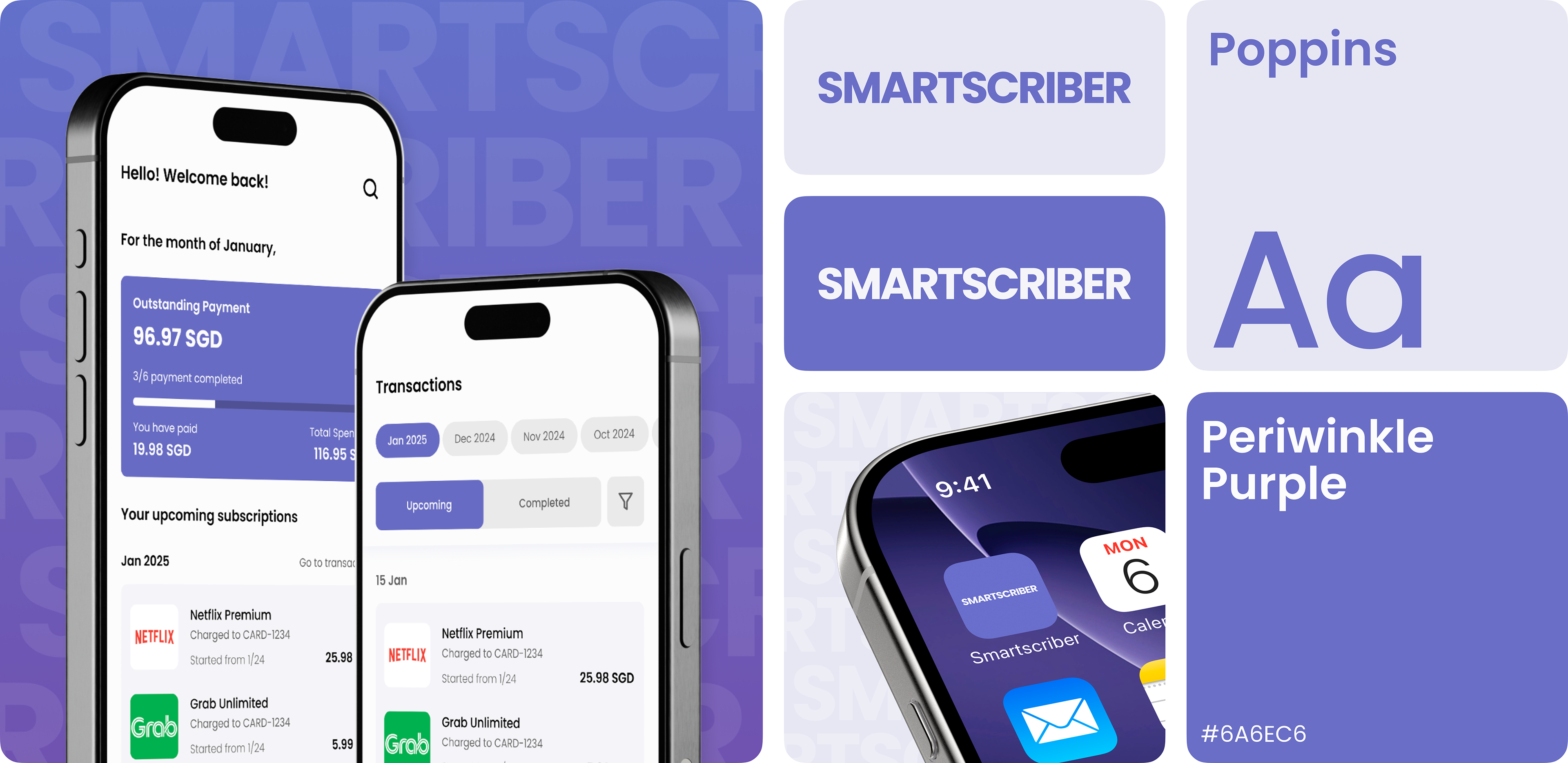
Smartscriber is a digital product that aims to help users better manage their finances through a comprehensive subscription tracking platform that provides an all-in-one view of their subscription services across different platforms, bank accounts.
“Smartscriber allows you to manage recurring
payments with ease, all within one powerful app.”
Primary Features:
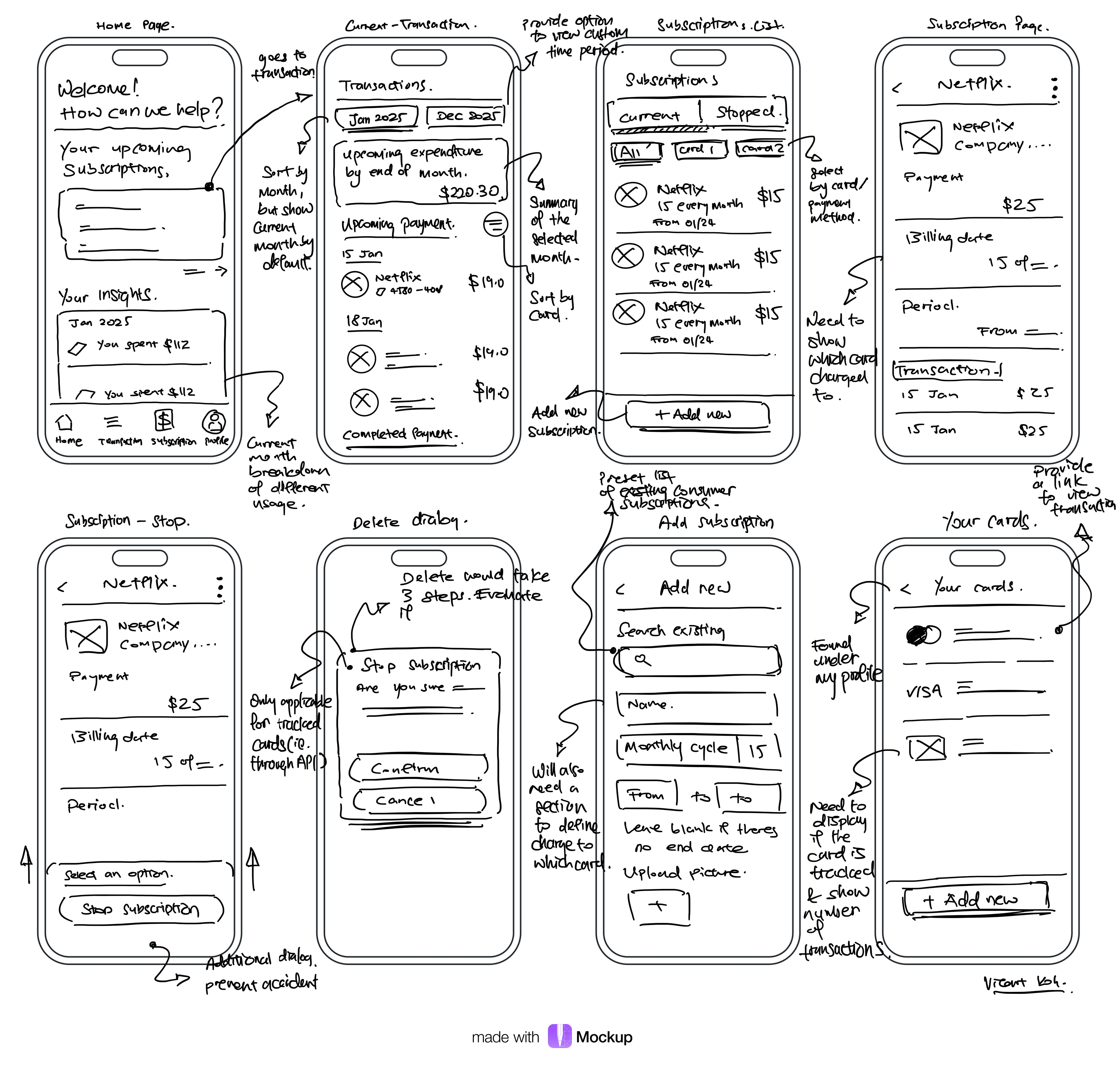
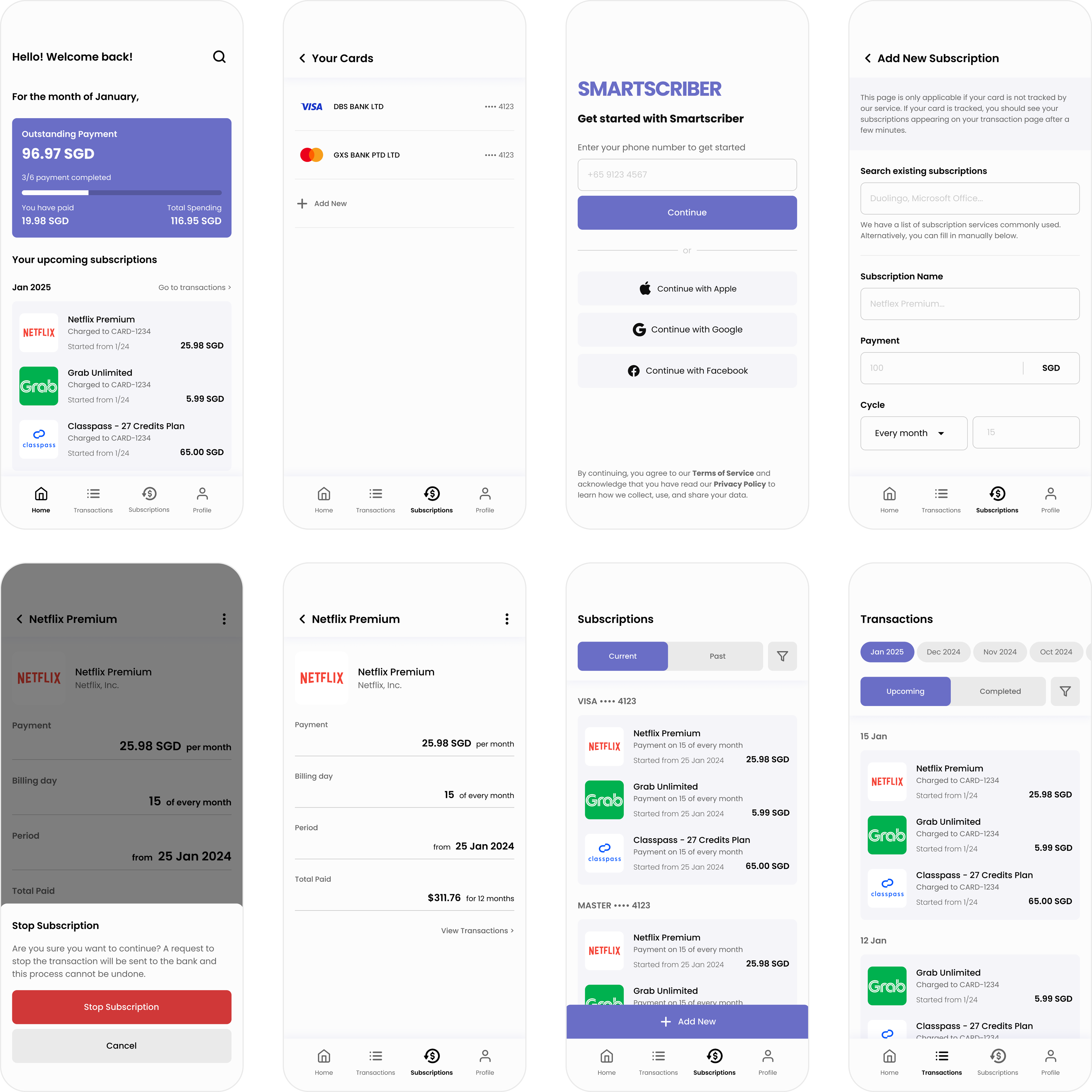
- Add credit card and allow for tracking their subscription details
- Add subscription manually if card is not supported at the moment, filling in relevant details.
- Stop subscription that user don’t need. (Eg. Using VISA Subscription Manger API)
- View transaction history and insights (monthly, yearly or user defined period)
- Notifies user on upcoming payment dates a few days before, with regular reminder to review monthly payments.
Why Smartscriber?
When is the last time you check on your subscriptions that you sign up for when browsing on your laptop, your phone and maybe even your friend’s desktop as well?
you confused by a random source of deduction that keeps happening or even if you know it, you didn’t know where to stop it?
maybe, you didn’t keep track of any of your subscriptions? Imagine how much money you could save if you remembered to stop those subscriptions you didn’t need!
You are not the only one!
Survey from Chase Reveals That Two-Thirds of Consumers Have Forgotten About At Least One Recurring Payment In The Last Year (2021)
The results indicate that consumers are increasing reliant on credit card payments, knowing where their credit card information are stored, but theres more focus on how to better handle finances.
The research shows the following consumer patterns and needs:
Consumers needs to know about their recurring payment and manage them easily.
- 60%
forgotten about at least one recurring payment.
- 71%
estimate more than $50 waste each month on recurring payments.
Recurring payments is a favoured option.
- 78%
have a minimum of 1 recurring charge on their card, 40% have 3–5.
- 70%
states that recurring payments made it easier to manage
- 55%
do not know how much is taken each month for recurring payment.
Cardmembers want more information about financial information.
- 60%
want to know where their card information is stored to easier manage recurring payment and finances.
- 56%
take on average 3 months to cancel unneeded recurring payment.
- 90%
value knowing where their card is stored at all times.
How might we allow users to be able to view and track their recurring subscriptions with an integrated and frictionless solution?
Users are able to track their recurring subscriptions now, but are not doing so effectively because of the following frictions (pain points):
Many users have multiple cards, tracking these transactions requires going through multiple bank applications, leading to difficulty in having an overview to recurring payments.
Even after identifying the subscription, it may be difficult to stop subscription because it may involve logging in to the webpage, and navigating to stop it. If its difficult, users may consider having to call the bank to suspend the subscription service.
Target Audience
Low - Mid Income Consumers
Recurring payment services targeting consumers can range from $5 to $60 a month on average (Eg. Netflix Basic $6.99, Dropbox $9.99, Duolingo Super $12.99).
Combining it with the research previously that state an average loss of around $50 waste per month, we could assume that the lost of income will affect low-mid income population the most as the waste is a larger percentage of their income level, which will significantly affect their expenses.
Low-mid income consumers can be relatively broad, ranging for unemployed students to white collared workers.
User Persona
Based on our breakdown above about the likely target audience, two persona can be deduced.
Melissa
University Student - 23 years old
Income Level - $1000SGD per month from part time work while studying
Recurring Payment Usage:
About her
As a student, she is all about anything productivity related. From her must have music streaming Spotify to note taking apps like Goodnotes, sometimes she may also sign up for other services when she start to increasing her frequency in using it for more discounts and promotion.
She loves trendy things and follows IG/Tiktok/ Youtube as her main social media source.
Timothy
Human Resource Manager - 32 years old
Income Level - $6000SGD per month
Recurring Payment Usage:
About him
With a family and 2 children, Timothy subscribes to many services on behalf of the family, including important ones such as monthly utility bills payment made through his card.
With a full time job, he find it hard to juggle family and work, and he sometimes would not remember what have he paid for and if theres anything unnecessary
him, family is the utmost important. Main social media source is IG/FB.
User Journey Analysis
-
Subscribe
Subscribes to a service
How SMARTSCRIBER helps
Tracks the payment cycle, cost and payment method on your behalf.
-
Lose track
Stop Using service after awhile and forget about recurring payment
How SMARTSCRIBER helps
Provides reminder notification near transaction date, reminder to review recurring payments
-
Review and cancel
Realise it after 3 months when casually checking bank statement, logging in to sites to unsubscribe
How SMARTSCRIBER helps
Stopping subscriptions with SMARTSCRIBER takes only a couple of step, making it easier to review and stop multiple necessary payments, all within the app.
There are many way users can interact with our product, this is a proposed user journey based on the above findings and based on logical assumptions. It would definitely benefit us to know more about usage pattern through prototype or MVP testing to craft possibly more user stories, which may further define which features we may want include in the design of the product.